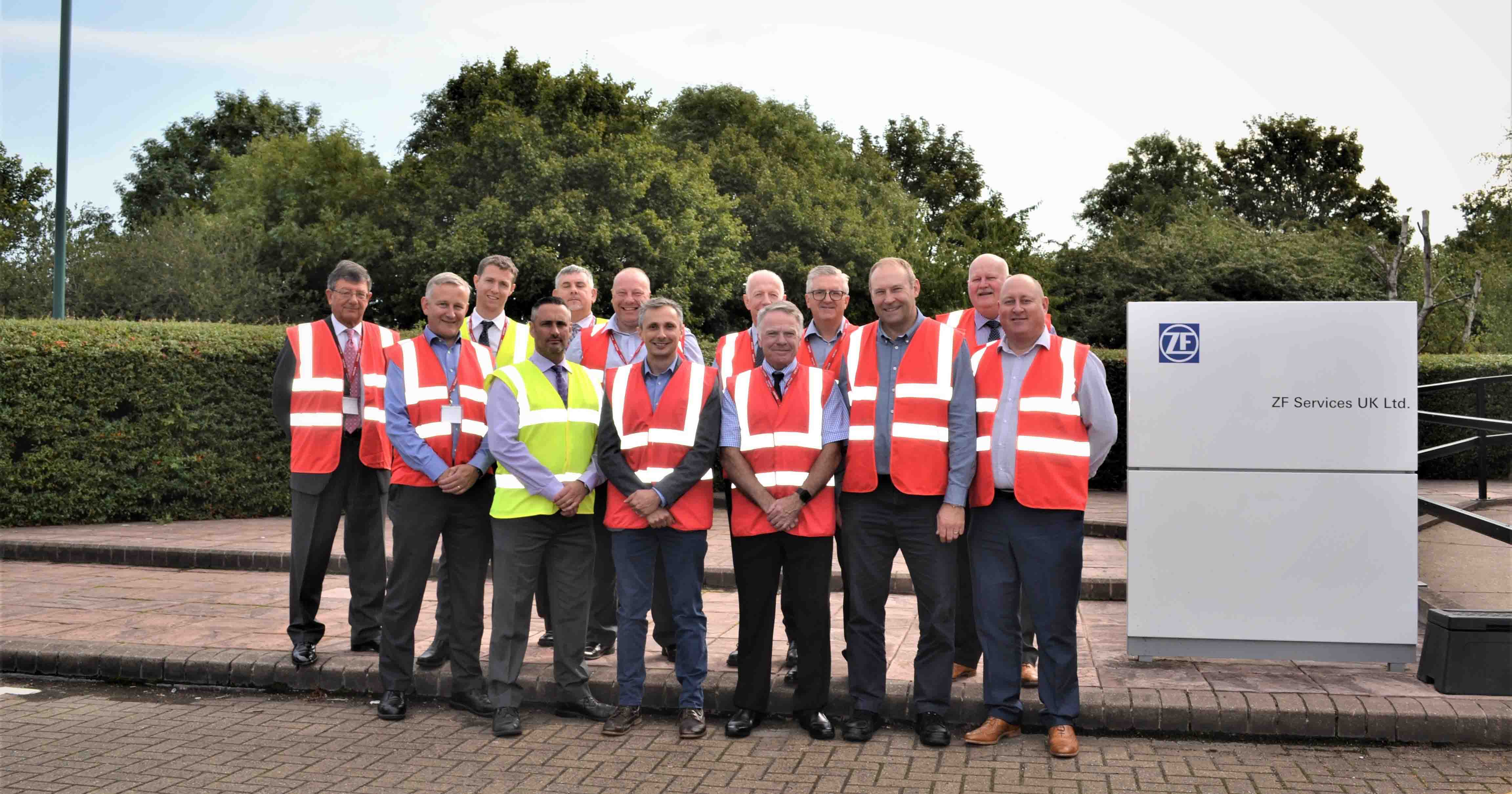
ZF Service UK’s ‘non-stop’ Nottingham showcase for NREC



Members of the Northern Regional Engineers Committee (NREC) congregated at ZF Services UK’s Centre of Competence in Nottingham on 30 August for its most recent meeting of the year, where they experienced first-hand the capabilities of the leading driveline specialist’s latest technology, as part of its broad e-mobility offering.
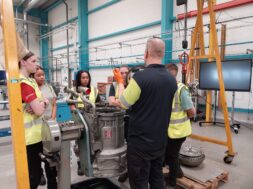
The group were welcomed by Director of ZF Services UK Chris Adcock, who gave a brief overview of the company’s new products and innovations, before being given a tour of its workshop and facilities. The remanufacturing facilities have recently undergone a substantial expansion so that ZFS UK are service-ready to cater for the growing requirement of operators dealing direct with ZF Services UK, both with transmission and axle repairs.
On-board benefits
Delegates were then invited to board a ZF Test bus, specially fitted with the ZF AxTrax AVE electric axle, as they were taken on a test drive around Nottingham city centre. The 45-minute showcase enabled the group to feel and experience first-hand the benefits of the electric axle – specifically the effortless take off, the obvious noise reduction, and the uncompromising and relentless torque delivery, all achieved with zero emissions and self-charging technology.
Unparalled performance
With its low weight and high output, the AxTrax AVE’s performance is currently unmatched by any other electric drive for city buses and the enormous traction means that a single electric axle – employed as pusher or puller – is capable of driving even fully laden articulated buses.
Route to success
Equipping bus fleets with electric drivelines in noise- and pollution-sensitive towns and cities provides enormous potential for emissions reduction, and ZF Services UK is continuing to implement new customer projects with the AxTrax AVE.
As a response to international requests for quotations for electrically powered buses, ZF – as European market leader – has received orders for more than 1,000 of its AxTrax AVE electric portal axles. These will soon be contributing to 60 million zero-emission passenger kilometres each year in cities such as Los Angeles, London or Stuttgart.
Integration innovation
One benefit of the AxTrax AVE axle is the innovative passenger compartment concept that offers more space and continuous low floor, meaning more passengers with a better flow on and off the vehicle. The additional versatility of this axle became apparent to the delegates after the test drive during a Q&A session with ZF Services UK’s technical specialist, Simon Ackroyd. He advises “European legislation is really driving forwards on the pursuit of innovation and mobility solutions. It’s clear to all that electrically driven vehicles will come out on top if the total cost of ownership becomes competitive.
“With this in mind, the AxTrax AVE not only fits the same footprint as the proven AV132/AV133 axles, but utilises common parts across the product groups too. This of course then opens up the possibilities of retrofit solutions to upcycle existing fleets.”
The committee’s afternoon meeting concluded the day’s events, with those who attended leaving with plenty of food for thought on what ZF’s future technology would hold for the coach and bus sector.
Mick Forbes, Engineering Director of Stagecoach East Midlands, said: “The visit was very well executed by ZF Services UK and the test drive was an extremely effective way of proving to its customers the competence of its e-mobility portfolio.”
Other positive comments were received from the group, including Jon Eardley, Engineering Director at Abellio, “It’s provided us with invaluable insight and we’re genuinely excited to see how future transport will shape up with ZF’s leading driveline and chassis technology through the AxTrax AVE.”
Chris Adcock, Managing Director at ZF Services UK, said: “Notwithstanding the achievements we are making with our new products and innovations to the industry, we are very proud to be able to demonstrate to a wide number of operators the full remanufacturing capabilities here in Nottingham and how we are able to support existing fleets, providing them with the confidence in dealing direct with us as the OE supplier.”
The NREC traces its history back to 1969 and the formation of the National Bus Company following the Transport Act in 1968, comprising Chief Engineers and their deputies from each of the various NBC operating subsidiaries across England.
The principle objectives of the group include sharing engineering best practice as well as health, Safety and Environment knowledge, reviewing maintenance practices and new maintenance theories whilst broadening knowledge and understanding of current and new emerging technologies.

