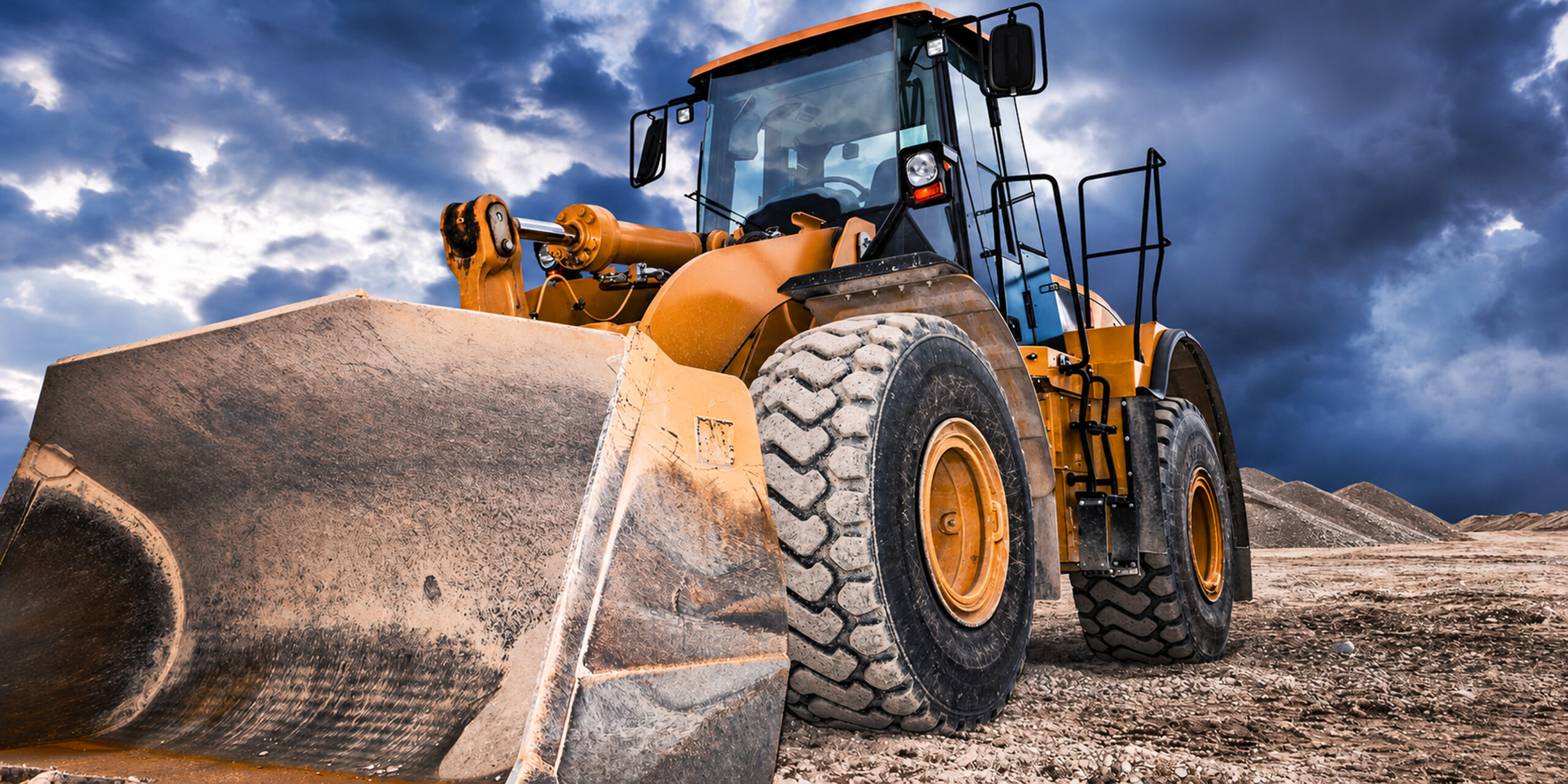
Construction machinery operates in a world where downtime is measured not simply in hours, but in lost productivity. Whether it is an excavator, wheel loader, dump truck, mobile crane or concrete mixer, when a machine stops working, the impact can quickly extend across an entire project.
As demand for housing, infrastructure and major construction projects continues, the pressure on off-highway machinery is significant. Equipment is expected to work for long hours under heavy loads, often in dust, mud, heat, cold and highly abrasive environments. For operators, fleet managers and repair specialists, keeping those machines productive throughout their working lives is therefore becoming increasingly important.
It is here that the aftermarket has a crucial role to play.
ZF Aftermarket brings decades of engineering experience in construction and other off-highway applications, with a comprehensive portfolio covering driveline, chassis and safety technologies, replacement parts and remanufactured components.
Uptime is the priority
For construction businesses, machinery is an investment that needs to earn its keep. Extending the productive life of that equipment requires more than responding when something fails; it means having the right maintenance strategy and replacement components available throughout the machine’s service life.
The extreme operating conditions found in construction make component quality particularly important. Transmissions and axles must cope with high torque and substantial loads, while braking systems need to provide consistent performance in demanding environments. Bearings, seals and driveline parts are similarly exposed to contamination, vibration, temperature changes and prolonged periods of heavy operation.
Using components engineered for the application can therefore have a direct impact on reliability, service intervals and ultimately the amount of time machinery remains operational.
ZF’s construction machinery portfolio reflects this whole-system approach, encompassing complete units as well as individual replacement components across transmissions, axles, powertrain and braking systems.
Supporting the driveline
The driveline is at the heart of many construction applications, transferring substantial levels of power while machinery digs, lifts, pushes or transports heavy materials.
ZF Aftermarket’s transmission portfolio includes complete transmission units alongside replacement gear parts, bearings, seals, range selectors, oils and lubricants, filters, electronic control units, torque converters and swing drives.
This breadth is particularly important in the aftermarket. A transmission issue does not necessarily mean an entire unit has reached the end of its working life. Access to individual components can allow repairers to identify the appropriate repair route and return machinery to operation without unnecessarily replacing a complete assembly.
ZF also offers axle solutions for construction machinery, including complete axle units alongside components such as bearings and seals. These components are designed to cope with the high loads and challenging conditions associated with heavy-duty off-highway operation.
Keeping safety in the equation
Productivity may be a priority, but it cannot come at the expense of safety.
The size, weight and operating environments of construction machinery place considerable demands on braking systems. ZF’s off-highway portfolio therefore includes braking technologies and replacement components developed for reliable stopping performance under demanding conditions.
Safety technology is also increasingly moving beyond traditional mechanical components. Modern construction equipment is becoming more sophisticated, with electronic systems and driver-assistance technology playing a greater role in machine operation.
For the aftermarket, this means technical capability must continue to develop alongside the machinery itself.
Accurate fault identification matters
As off-highway machines incorporate increasingly complex electronic systems, accurately identifying a fault can be just as important as having the replacement component available.
Effective diagnostics can help repairers avoid unnecessary component replacement, identify problems more quickly and carry out more targeted repairs – all of which can contribute to reducing downtime.
ZF’s Testman diagnostic system is used within relevant applications to support targeted troubleshooting of ZF systems. However, access and availability can vary depending on the application and service environment.
More broadly, the increasing complexity of off-highway equipment highlights the importance of accurate fault identification. The quicker the cause of a problem can be established, the sooner an informed repair decision can be made and the machine returned to productive operation.
Repair rather than automatically replace
Another increasingly important consideration is how the industry manages the cost and environmental impact of maintaining heavy machinery.
Remanufacturing provides one route. Rather than automatically replacing a complete component with a newly manufactured unit, suitable products can be industrially remanufactured and returned to service.
ZF Aftermarket, for example, offers remanufactured torque converters alongside new products. Through standardised industrial processes and testing, components can be restored to defined quality standards while retaining and reusing a significant proportion of the materials already invested in the original product.
For an industry operating expensive assets over long service lives, this approach can make both commercial and environmental sense.
Looking beyond the replacement part
Perhaps the biggest change for the off-highway aftermarket is that maintaining construction machinery can no longer be viewed simply as supplying a component when something breaks.
Today’s repair environment increasingly requires an understanding of the complete system, supported by access to quality replacement components and accurate technical information.
As construction machinery continues to evolve, this whole-system approach will become increasingly significant.
Electrification, sophisticated electronic controls and advanced safety systems are changing the technical requirements of the sector. At the same time, operators still need to maintain conventional machines that may remain productive for many years.
The challenge for the aftermarket is therefore twofold: continue to maintain the established machine parc effectively while developing the skills and capabilities required for the next generation of equipment.
ZF Aftermarket’s broad off-highway portfolio is designed to contribute to that objective, providing components and solutions for machinery throughout its working life.
Because on a construction site, the most valuable machine is ultimately the one that is working.
This website uses cookies to improve your experience. We'll assume you're ok with this, but you can opt-out if you wish.AcceptRead More
Privacy & Cookies Policy
Privacy Overview
This website uses cookies to improve your experience while you navigate through the website. Out of these, the cookies that are categorized as necessary are stored on your browser as they are essential for the working of basic functionalities of the website. We also use third-party cookies that help us analyze and understand how you use this website. These cookies will be stored in your browser only with your consent. You also have the option to opt-out of these cookies. But opting out of some of these cookies may affect your browsing experience.
Necessary cookies are absolutely essential for the website to function properly. This category only includes cookies that ensures basic functionalities and security features of the website. These cookies do not store any personal information.
Any cookies that may not be particularly necessary for the website to function and is used specifically to collect user personal data via analytics, ads, other embedded contents are termed as non-necessary cookies. It is mandatory to procure user consent prior to running these cookies on your website.