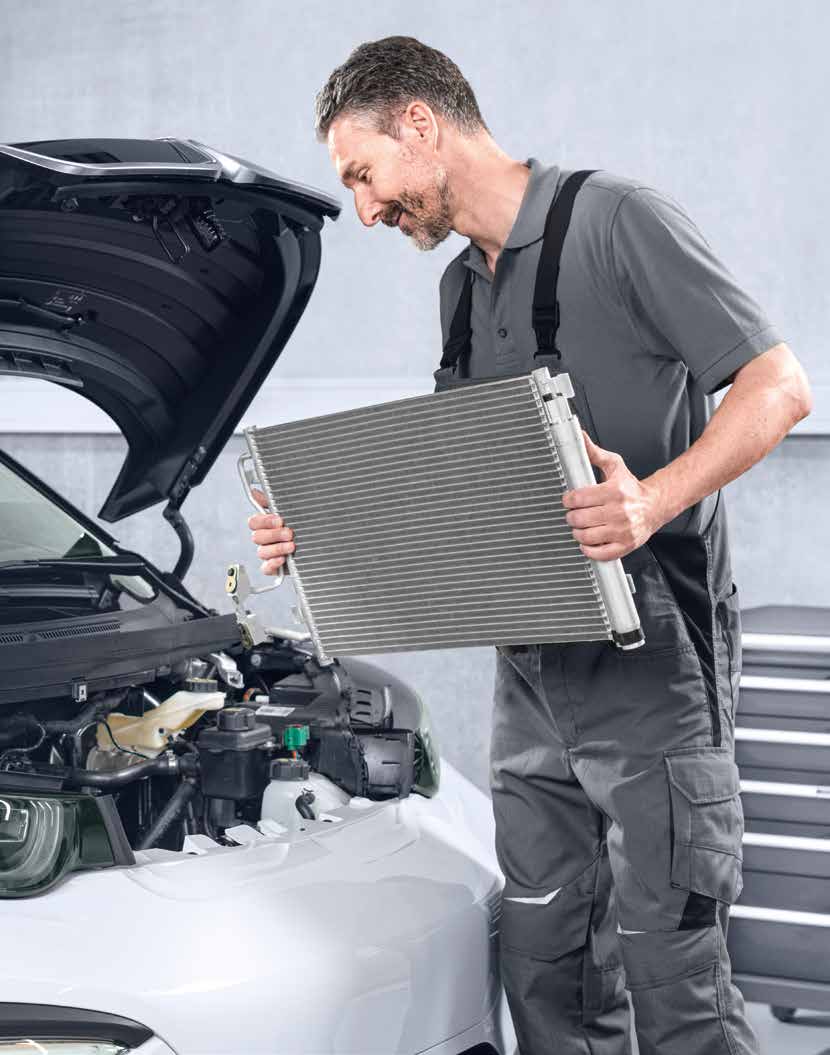
MAHLE releases technical bulletin on importance of cleaned cooling systems





Thermal management specialist, MAHLE, has reminded technicians of the importance and benefits of cleaning cooling systems following contamination.
In its latest technical bulletin, MAHLE points out that contamination and leakage are among the most common types of damage to the cooling circuit. If there are leaks to the outside, the source of the defect is relatively quick and easy to locate, however the diagnosis of a problem is much harder if it is an internal issue.
Oil in the cooling system can trigger various problems, including causing the seal to the plastic housing of the water tank in some radiators to swell, resulting in leaks.
Deposits and contamination, such as corrosion, limescale, sealant, or other foreign objects, can also damage components in the cooling circuit. Foreign matter can block the narrow pipework in the radiator, corrode materials, or lead to increased wear on the mechanical seal of the coolant pump, for example.
On discovery of oil or other contaminants in the cooling system, the root cause must be dealt with. Once this has been done, in order to maintain longer-term health of the system and prevent further issues, MAHLE has offered advice on the steps to take.
In the next step, the entire cooling system must be flushed several times with a special cooling system cleaner while the engine is at operating temperature, following specifications outlined by the vehicle manufacturer and coolant producer.
Finally, when no more residues or foreign objects are present, the system must be flushed with warm water until only clear water runs out. After cleaning the cooling circuit, the system must be refilled with fresh coolant in the correct ratio of water to antifreeze. The most effective way to do this is with a vacuum-venting device that reliably prevents air traps from forming.

8MA 376 723-711
8MA 376 737-011
8FH 351 312-451
8FK 351 130-111
8EW 351 104-741
8MK 376 783-631
8MO 376 726-031
8UW 351 234-051
8FT 351 195-691
Notes: BHS, Thermo Management, Thermal Management, Off-Highway